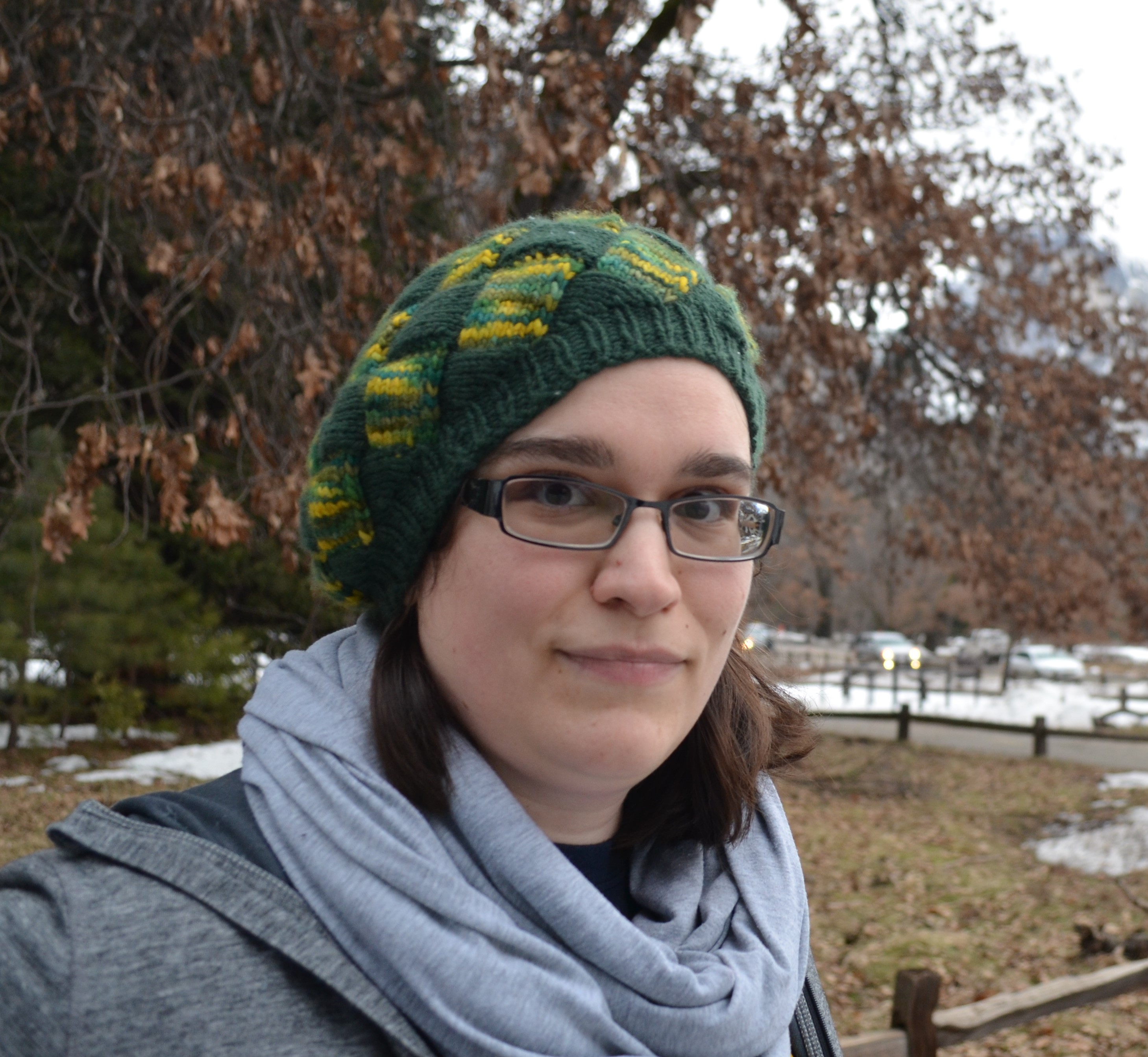
My name is Katie Butterfield and I’m a quantitative sociologist interested in research and teaching opportunities in research methods, food systems,
and health disparities. I hold a PhD in sociology from the University of California, Merced, have served as the lead Research Data Analyst for the CalFresh
and Nutrition Branch at the California Department of Social Services, and am currently a postdoctoral researcher in the
Agricultural Sustainability Institute at the University of California, Davis. I have 10+ years of
experience in quantitative and mixed-methods research, including work with experts in the fields of sociology, public health, and human ecology.
My research program addresses social inequalities throughout our food system by asking how and under what conditions sustainable food programs
can improve food access and limit exploitation among disadvantaged populations.
I currently serve as a postdoctoral researcher for the Agricultural Sustainability Institute at the University of California, Davis. I explore the
limited adoption of more worker and environmentally friendly organic farming practices across California. I work with Dr. Ryan Galt to explore
organic production trends across California using public and proprietary data, including the development of a new method for separately tracking
organic cropland and animal production within the state. Working with Dr. Galt, and in consultation with USDA's Agricultural Marketing Service (AMS) and Dr. Houston Wilson from UC ANR Organic Agriculture Institute, I also led the research design and implementation for a study exploring market data
needs and pricing decisions within California’s organic agrifood industry, gathering and analyzing data from 227 surveys and 26 interviews
on the topic. From these findings, we submitted a report to AMS recommending improvements to their organic market data, drafted a journal
article that situates these findings in existing theory, and continue to draft journal articles considering how pricing decisions of
organic agrifood actors demonstrate power dynamics in the system and how qualitative data informs decision-making among organic agrifood actors.
At the local level, my research on community gardens across the United States highlights strategies for, and barriers to, supporting community
gardens as participatory food and health resources in Black, Latinx, working-class, and rural communities. My work can help maximize the overall
social equity of local agrifood systems. For example, in “Modeling community garden participation: how locations and frames shape participant demographics”
published in Agriculture and Human Values, I developed a conceptual model
to explain community garden participation as an iterative process of framing, accessibility, and representation, all situated within a garden’s surrounding
community. In “Neighborhood Composition and Community Garden Locations: The Effect of Ethnicity, Income, and Education,” published in
Sociological Perspectives, I provide crucial quantitative metrics suggesting the
diversity of neighborhoods with community gardens and support their inclusion in urban public policy and city planning. In other work co-authored with
public health scholar Dr. Susana Ramírez, “Framing Food Access: Do Community Gardens Inadvertently Reproduce Inequality?,” published in
Health Education and Behavior, findings suggest that community gardens may
be welcoming toward a diversity of participants but still have room to improve the inclusivity of the framing in their mission statements and goals.
As the lead Research Data Analyst for the CalFresh and Nutrition Branch at the California Department of Social Services, I directly
supported leadership in making data-informed decisions about how best to improve equitable access to healthy food among California’s more vulnerable
populations as well as related client outcomes and contractual results. I independently conducted varied research tasks to support data collection
and analysis and compiled, analyzed, and interpreted statewide and county data related to CalFresh program areas. I created reports, summaries, and
visualizations and communicated findings to department and external stakeholders. To assess program effectiveness, I also monitored trends in CalFresh
administrative data and supported the development of complex SQL queries to extract new administrative data measures from one of the largest
automated welfare data system in the world.
As a graduate student at University of California, Merced, I taught several courses including Introduction to Sociology and Statistics for Sociology.
I guided my students through ethnographic and statistical research projects. I presented my work at academic conferences and on-campus workshops aimed
at audiences with varying technical and research backgrounds. I was an active member of the
Communication, Culture, and Health and
Sociology of Health and Equity labs at University of California,
Merced. I also served as co-chair of the California Economists Collective,
and have served on Healthy Campus Network Committee, Sociology Graduate Student Committee, and Graduate Student Association at UC Merced. My work has been supported by the John & Victoria Elia Fellowship, UC Merced Blum Center Seed Grant, and UC Global Food Initiative Fellowship and related Grow Grant.
|